27 posts tagged with "tutorials"

View All Tags

How to Store MQTT Data With ReductBridge (No Code Required)

· 8 min read
Alexey Timin
Co-founder & CTO - Database & Systems Engineering

MQTT+ReductBridge+ReductStore

The MQTT protocol is an easy way to connect sensors, machines, robots, and other IoT data sources to applications. Some MQTT brokers can persist messages for a short time, but long-term history, retention policies, and efficient querying usually belong in a time series database.

There are many databases available for storing MQTT data, but if your payloads include JSON telemetry, images, vibration samples, protobuf messages, or other blob-like data, ReductStore is a good fit. It is designed for time-stamped unstructured data at the edge and supports labels for filtering, querying, and replication.

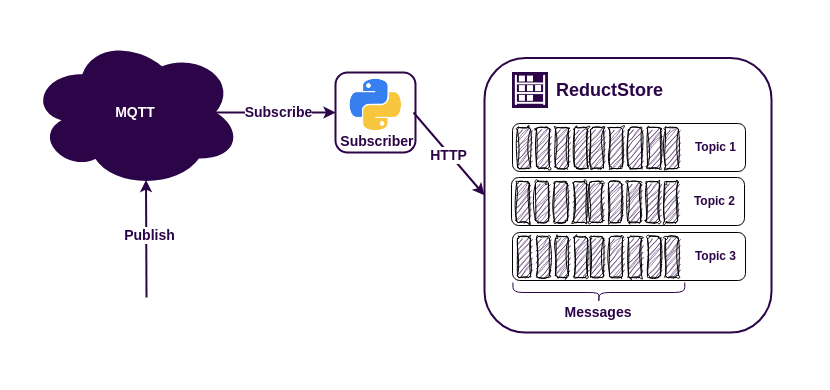
In previous MQTT tutorials, we used Rust, Python, or Node.js code to subscribe to MQTT topics and write records to ReductStore. This tutorial uses a different approach: ReductBridge subscribes to MQTT, extracts labels from payloads, and forwards data to ReductStore using only a TOML configuration file.
Building a Resilient ReductStore Deployment with NGINX

· 5 min read
Alexey Timin
Co-founder & CTO - Database & Systems Engineering

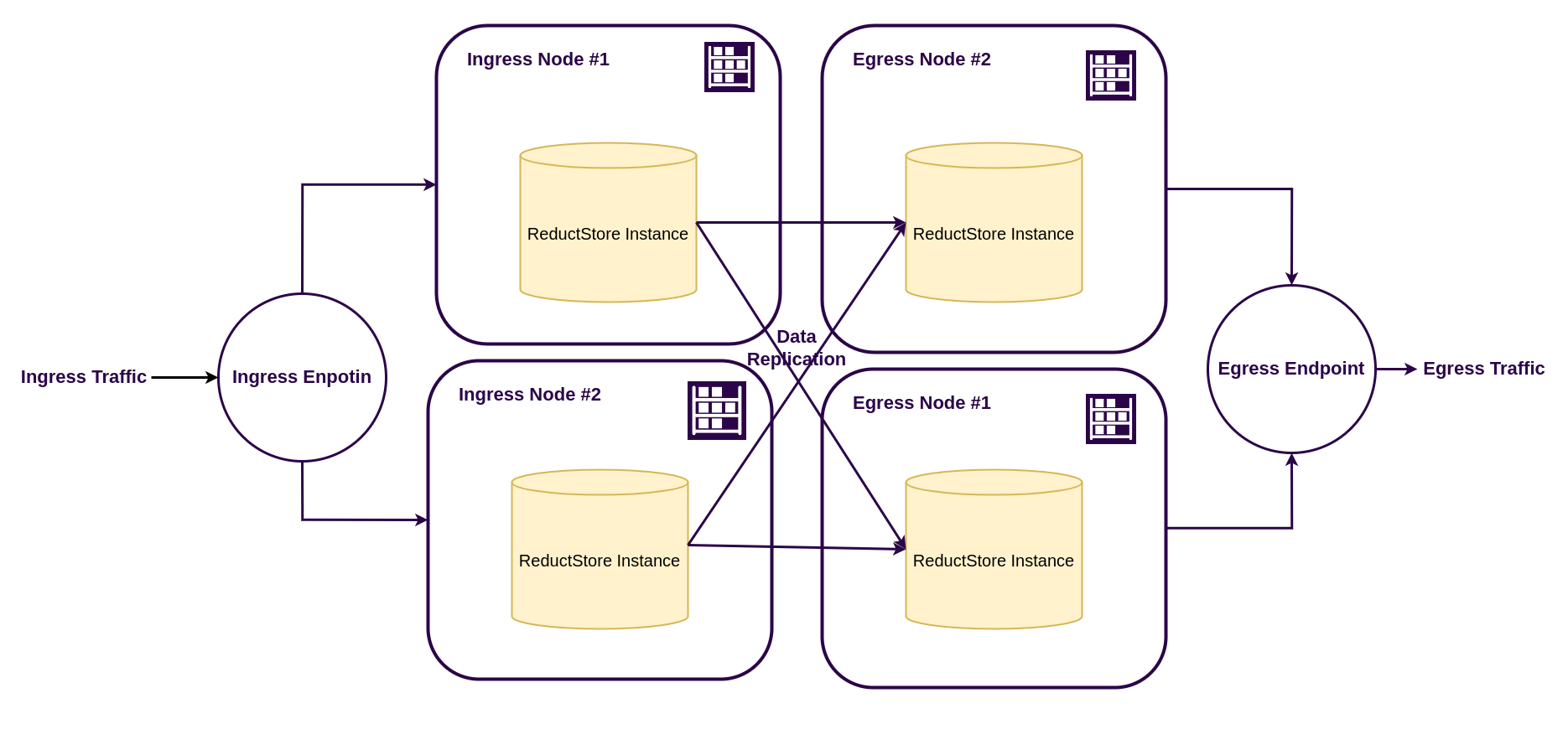
If you’re collecting high-rate sensor or video data at the edge and need zero-downtime ingestion and fault-tolerant querying, an active–active ReductStore setup fronted by NGINX is a clean, practical pattern.

This tutorial walks you through the reference implementation, explains the architecture, and shows production-grade NGINX snippets you can adapt.

What We’ll Build

We’ll set up a ReductStore cluster with NGINX as a reverse proxy, separating the ingress and egress layers. This architecture allows for independent scaling of write and read workloads, ensuring high availability and performance.

NGINX Resilient Deployment

3 Ways to Store Computer Vision Data

· 9 min read
Alexey Timin
Co-founder & CTO - Database & Systems Engineering

Computer Vision with ReductStore

When building computer vision systems, efficient data storage is a fundamental requirement. Whether you're capturing images for training, storing inference results for validation, or archiving sensor data for future analysis, your storage solution must be both reliable and high-performance.

Ingestion speed is especially critical. If your system can’t write data fast enough — whether it’s high-frequency frames or accompanying metadata — you risk losing valuable information or creating bottlenecks in the pipeline.

In this post, we’ll look at three common approaches to storing data in computer vision applications: a traditional file system, S3-compatible object storage, and ReductStore, a time-series-optimized blob storage. We’ll explore the strengths and limitations of each approach to help you choose the best fit for your application.

A Simple Computer Vision Application

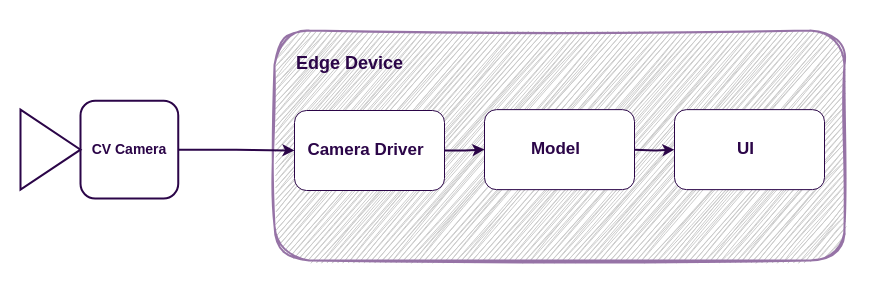
For demonstration purposes, we’ll use a simple computer vision (CV) application which is connected to a CV camera and runs on an edge device:

Computer Vision Application

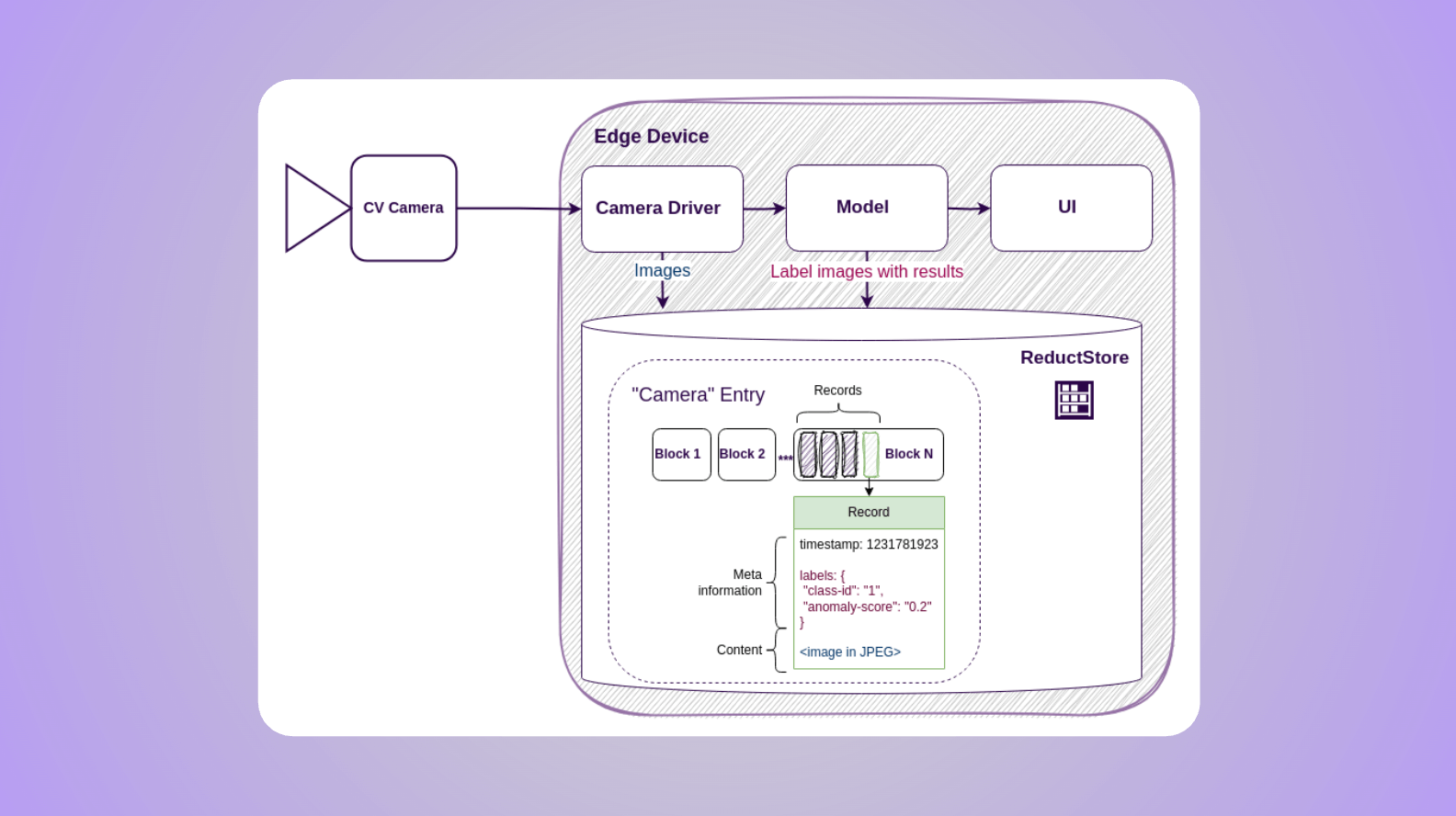
The camera driver captures images from the CV camera every second and forwards them to the model, which then detects objects and displays the results in the user interface.

Your images and results need to be stored for training and validation purposes. The customer may also wish to view images featuring anomalous objects. These requirements present the challenge of maintaining a history of blob or unstructured data.