5 posts tagged with "mqtt"

View All Tags

How to Store MQTT Data With ReductBridge (No Code Required)

· 8 min read
Alexey Timin
Co-founder & CTO - Database & Systems Engineering

MQTT+ReductBridge+ReductStore

The MQTT protocol is an easy way to connect sensors, machines, robots, and other IoT data sources to applications. Some MQTT brokers can persist messages for a short time, but long-term history, retention policies, and efficient querying usually belong in a time series database.

There are many databases available for storing MQTT data, but if your payloads include JSON telemetry, images, vibration samples, protobuf messages, or other blob-like data, ReductStore is a good fit. It is designed for time-stamped unstructured data at the edge and supports labels for filtering, querying, and replication.

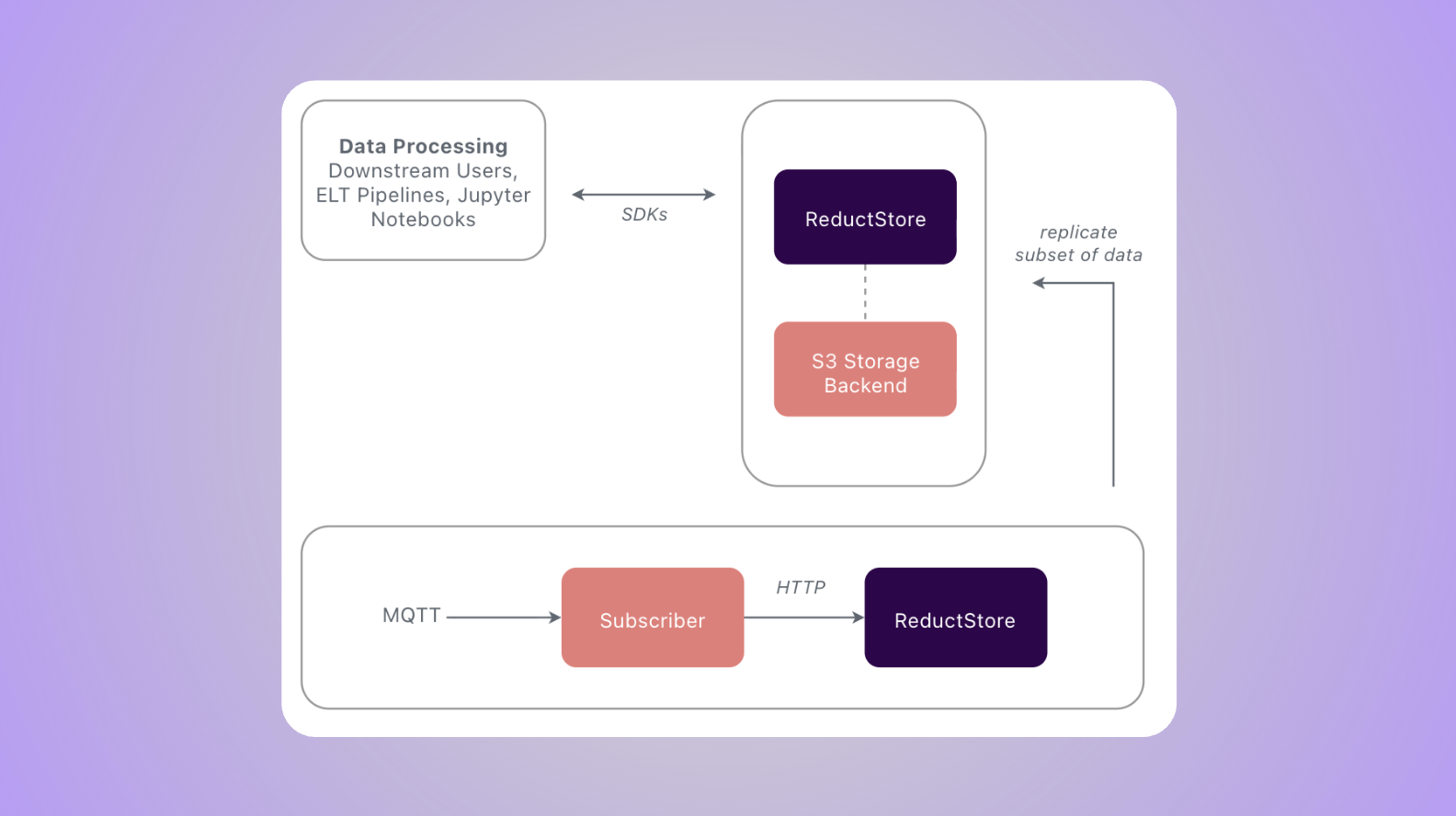
In previous MQTT tutorials, we used Rust, Python, or Node.js code to subscribe to MQTT topics and write records to ReductStore. This tutorial uses a different approach: ReductBridge subscribes to MQTT, extracts labels from payloads, and forwards data to ReductStore using only a TOML configuration file.

How to Choose the Right MQTT Database

· 16 min read
Anthony Cavin
Co-founder & CEO - Data, ML & Robotics Systems

MQTT Data Storage

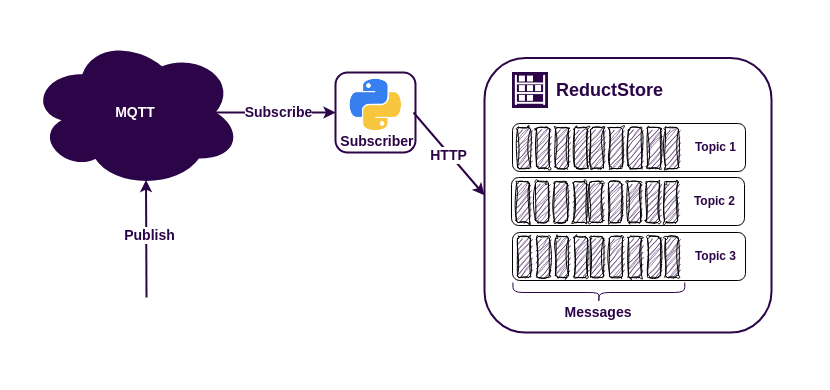
At a previous company, we used MQTT to send industrial data, such as vibration readings, images and log files. However, maintaining a history of this data proved challenging. Initially, we used a combination of a time-series database and an object store, but we struggled to ingest blob data quickly enough, and the system was difficult to maintain.

To help you avoid a similar experience, this article will recommend the most suitable database for your IoT or Industrial IoT (IIoT) project. We will look at different ways of storing data from IoT devices that communicate with each other via MQTT.

MQTT stands for Message Queuing Telemetry Transport and is a lightweight messaging protocol designed to be efficient, reliable, and scalable, making it ideal for collecting and transmitting data from sensors in real time.

Why is this important when choosing a database?

Well, MQTT is format-agnostic, but it works in a specific way. We should therefore be aware of its architecture, how it works, and its limitations to make the right choice. This is what this article is about, we will try to cut through the fog and explore some key factors to consider when selecting the right option.

Let's get started!

Keeping MQTT Data History with Node.js

· 6 min read
Alexey Timin
Co-founder & CTO - Database & Systems Engineering

MQTT+ReductStore in Node

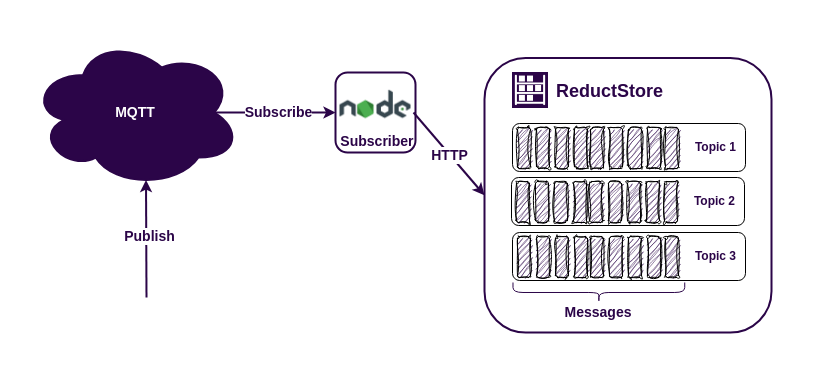
The MQTT protocol is widely used in IoT applications because of its simplicity and ability to connect different data sources to applications using a publish/subscribe model. While many MQTT brokers support persistent sessions and can store message history while an MQTT client is unavailable, there may be cases where data needs to be stored for a longer period of time. In such cases it is recommended to use a time series database. There are many options available, but if you need to store unstructured data such as images, sensor data or Protobuf messages, you should consider using ReductStore as a MQTT database. It is a time series database specifically designed to store large amounts of unstructured data, optimised for IoT and edge computing.

ReductStore provides client SDKs for many programming languages to integrate it into your infrastructure. For this example, we will use the JavaScript client SDK.

Let's build a simple application to understand how to keep a history of MQTT messages using ReductStore and Node.js.